
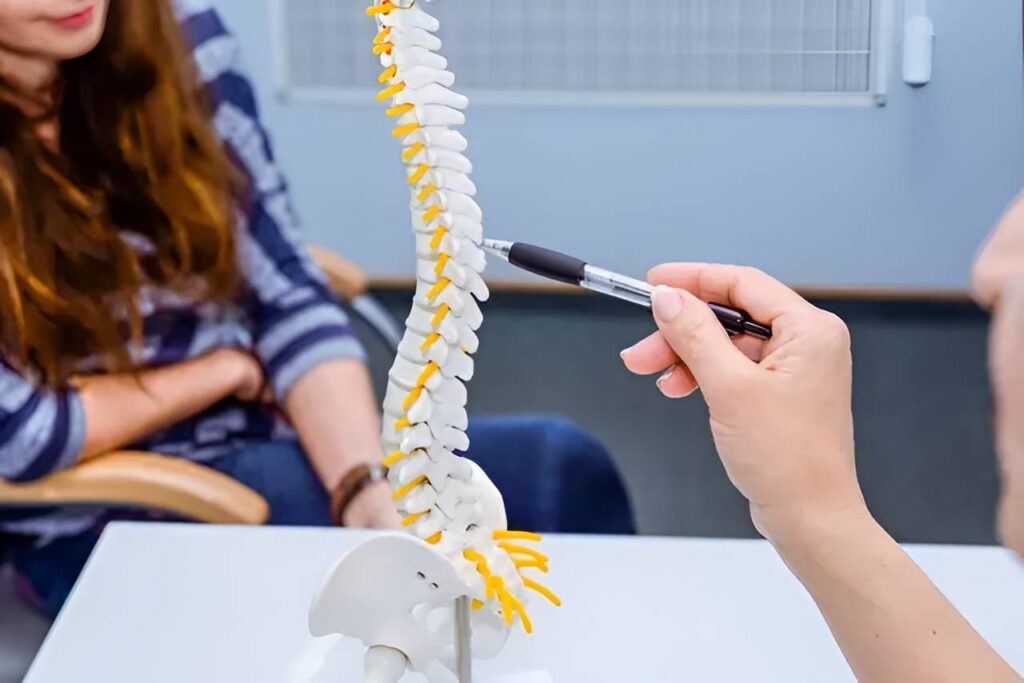
If you’re over 40 and have persistent neck or back pain, degenerative disc disease could be the culprit. At Interventional Pain Specialists of Wisconsin, SC, in Hudson, Rice Lake, and Altoona, Wisconsin, our experienced team of interventional spine and pain management specialists provides advanced treatments designed to relieve pain, restore function, and protect the spine from further damage.
Understanding Degenerative Disc Disease
Degenerative disc disease occurs when the spinal discs—the soft cushions between the vertebrae—begin to dry out, weaken, or break down over time. Healthy discs act as shock absorbers and help the spine move smoothly. As discs degenerate, they lose height and strength, which can lead to pain, inflammation, and reduced mobility.
Although disc degeneration is commonly associated with aging, injury, genetics, and lifestyle factors can accelerate the process. A structured and individualized treatment plan can significantly reduce symptoms and help patients stay active.
Symptoms of Degenerative Disc Disease
Symptoms vary depending on the location and severity of degeneration, but commonly include:
- Chronic neck or back pain
- Pain that worsens with sitting, bending, twisting, or lifting
- Numbness, tingling, or weakness in the arms or legs
- Pain that radiates outward from the spine
If left untreated, degenerative disc disease can contribute to additional spine problems, including herniated discs, spinal stenosis, misaligned vertebrae, and adult acquired (degenerative) scoliosis.
Degenerative Discs and Modic Changes
As spinal discs degenerate, they can place abnormal stress on the vertebral endplates—the bone surfaces just above and below each disc. Over time, this can lead to Modic changes, which are inflammatory or fatty changes within the vertebral bone marrow that are visible on MRI.
Modic changes are a well-recognized cause of vertebrogenic low back pain, a specific type of chronic pain that originates from the vertebral bodies rather than the discs or facet joints. Patients with Modic changes often have deep, persistent low back pain that does not respond well to traditional treatments like physical therapy or steroid injections.
Risk Factors for Disc Degeneration
Several factors can increase the risk or speed up disc degeneration, including:
- Prior trauma or injury to the spine
- Carrying excess body weight
- Smoking, which reduces blood flow and disc nutrition
- Physically demanding jobs or repetitive spinal stress
Diagnosis of Degenerative Discs
Diagnosis begins with a comprehensive evaluation of symptoms, lifestyle, and medical history. Testing may include:
- X-rays to assess alignment and disc height
- MRI scans to evaluate disc health, nerve compression, and Modic changes
- CT scans or nerve studies when additional detail is needed
Accurate diagnosis allows us to target the true pain generator and avoid unnecessary treatments.
Advanced Treatment Options for Degenerative Disc Disease
Treatment is tailored to each patient’s condition, goals, and imaging findings. Conservative options may include physical therapy, anti-inflammatory medications, steroid injections, or radiofrequency ablation. When pain persists, advanced interventional and regenerative treatments may be appropriate.
Intradiscal Regenerative Therapy (Intradiscal BMAC)
For selected patients, intradiscal regenerative therapy offers a minimally invasive option aimed at addressing disc-related pain at its source. This treatment involves injecting bone marrow aspirate concentrate (BMAC) directly into the damaged disc under precise image guidance.
BMAC contains stem cells and growth factors that may help reduce inflammation, support tissue repair, and improve disc health. Intradiscal BMAC is designed to stabilize painful discs, slow degeneration, and potentially delay or avoid the need for major spine surgery.
Treatment for Modic Changes: The Intracept Procedure
For patients with chronic low back pain associated with Modic changes, the Intracept® procedure may be an effective option. This minimally invasive procedure targets the basivertebral nerve, which transmits pain signals from the vertebral bodies.
By interrupting this pain pathway, the Intracept procedure can provide long-lasting relief for patients with vertebrogenic pain who have not improved with conservative care. The procedure is performed under image guidance and does not involve implants or spine fusion. It was developed by Boston Scientific and is supported by strong clinical evidence.
Insurance Coverage and Cost Considerations
Many regenerative treatments, including intradiscal BMAC injections, are not covered by traditional insurance plans. However, for many patients, these therapies can be cost-competitive when compared to repeated copays, ongoing medications, lost days at work, and the long-term costs associated with major spine surgery or spinal fusion.
Intracept, in contrast, is covered by many insurance plans, including Medicare, when specific clinical criteria are met. Our team works closely with patients to review imaging, determine candidacy, and assist with prior authorization when applicable.
Why Choose Us for Degenerative Disc Disease Treatment
At Interventional Pain Specialists of Wisconsin, SC, we combine decades of spine care experience with access to advanced therapies that are not widely available in the region. Our board-certified physicians in pain medicine and anesthesiology provide comprehensive evaluations and precision-guided treatments tailored to each patient.
We are the only practice in the area offering a full spectrum of care in one location—including regenerative medicine, conventional interventional pain procedures, and ultra–minimally invasive spine surgery. All procedures are performed using advanced image guidance to maximize safety, accuracy, and outcomes. Our focus goes beyond temporary pain relief to long-term spine health and quality of life.
Frequently Asked Questions
Can degenerative disc disease get worse over time?
It can, but not always. Some people experience gradual worsening, while others find that symptoms stabilize or even improve as the spine adapts. Progression varies widely from person to person.
Where in the spine does degenerative disc disease occur most often?
Degenerative disc disease most commonly affects the lower back and the neck, as these areas bear the most stress and movement.
Can lifestyle habits contribute to degenerative disc disease?
Yes. Smoking, poor posture, lack of exercise, and excess weight can all accelerate disc degeneration and increase symptoms.
What does degenerative disc pain feel like?
Pain is often a dull ache or sharp discomfort in the back or neck. It may worsen with sitting, bending, or lifting, and can sometimes radiate into the arms or legs.
What activities make symptoms worse?
Activities that involve prolonged sitting, heavy lifting, bending, twisting, or high-impact movements can aggravate symptoms.
What activities help relieve symptoms?
Gentle movement, walking, stretching, and low-impact exercises like swimming or yoga can loosen up stiffness and improve comfort. Changing positions frequently can also provide relief.
Can degenerative disc disease be mistaken for other conditions?
Yes. Its symptoms can overlap with conditions like herniated discs, spinal stenosis, arthritis, or muscle strain, which is why proper diagnosis is important.
How quickly does degenerative disc disease progress?
Progression is typically slow and may take years. In many cases, symptoms come and go rather than steadily worsening.
Does exercise help or worsen degenerative disc disease?
Exercise is generally beneficial. Strengthening muscles that support the spine helps to reduce pain and improve function. However, high-impact or improper exercises may worsen symptoms.
When is surgery recommended for degenerative disc disease?
Surgery is usually an option only when conservative treatments fail and symptoms significantly impact daily life, especially if there is persistent pain, nerve compression, or loss of function.
Can degenerative disc disease be cured?
There is no cure, but many people successfully manage symptoms with conservative treatments and lifestyle changes.
What is the best sleeping position for degenerative disc disease?
Sleep on your back with a pillow under your knees, or on your side with a pillow between your knees to help reduce strain on your spine and improve comfort.
Can I still work with degenerative disc disease?
Yes, most people can continue working, especially with adjustments such as ergonomic workstations, frequent breaks, and modified activities.
How long does it take to recover from a flare-up?
Flare-ups can last from a few days to several weeks. With proper care, symptoms typically improve gradually over time.
How long is the recovery after the Intracept® Procedure?
Recovery is typically relatively quick. Most patients return to light activities within a few days and regular routines within a few weeks, although full pain relief may take several weeks to develop.
How long does it take to recover from intradiscal BMAC treatment?
Recovery from intradiscal BMAC is usually short. Patients may experience mild soreness for a few days, with gradual improvement over several weeks as the regenerative process takes effect. Full benefits often develop over a few months.
Is degenerative disc disease just a normal part of aging?
Disc changes become more common after age 40, but not everyone develops chronic pain. Some people have visible degeneration on imaging and feel little discomfort, while others experience significant symptoms. Pain typically occurs when disc breakdown leads to inflammation, instability, or nerve irritation. A detailed evaluation helps determine whether the disc itself is the true source of your pain.
How do you know if my pain is coming from the disc or another structure?
Neck and back pain can originate from discs, facet joints, nerves, or vertebral endplates. Our specialists review your symptoms, perform a focused physical exam, and analyze imaging, such as MRI, to identify patterns, such as disc collapse or Modic changes. This careful approach helps us target the actual pain generator rather than relying on generalized treatments.
Can degenerative disc disease be treated without major surgery?
Yes. Many patients improve with structured conservative care, interventional procedures such as Intracept, or regenerative options such as intradiscal therapies. We offer a broad range of treatments and build individualized plans designed to relieve pain, improve mobility, and protect long-term spine health.
What is the Intracept procedure, and who qualifies?
The Intracept procedure is a minimally invasive treatment designed for patients with chronic low back pain linked to Modic changes on MRI. These changes indicate inflammation within the vertebral bone, which can irritate the basivertebral nerve. Intracept uses controlled radiofrequency energy to deactivate that nerve inside the vertebral body. It does not involve spinal fusion or implanted hardware. Candidates typically have persistent low back pain for at least six months and have not improved with conservative care.
How is Intracept different from steroid injections or ablation?
Traditional injections reduce inflammation temporarily around joints or nerves. Intracept specifically targets vertebrogenic pain originating within the vertebral body. Because it addresses a distinct nerve pathway, it may provide longer-lasting relief for properly selected patients. Imaging confirmation of Modic changes is important for determining candidacy.
Intracept is performed by physicians who have completed specialized training in the procedure. Our practice is recognized as a Boston Scientific Center of Excellence for the Intracept procedure, reflecting our experience and commitment to treating vertebrogenic low back pain with precision.
Degenerative Disc Disease Consultations in Rice Lake, Hudson, and Hudson, WI
If neck or back pain is interfering with your daily activities, call (715) 234-7246 (PAIN) today to schedule your consultation. We proudly serve patients at our convenient locations in Hudson, Rice Lake, and Altoona, WI.